Just don’t give up trying to do what you really want to do. Where there is love and inspiration, I don’t think you can go wrong.—Ella Fitzgerald
Quote of the week: Week of April 16, 2018

Just don’t give up trying to do what you really want to do. Where there is love and inspiration, I don’t think you can go wrong.—Ella Fitzgerald

One of the secrets to staying young is to always do things you don’t know how to do, to keep learning.—Ruth Reichl

Second star to the right and straight on ’til morning.― J.M. Barrie, Peter Pan

No dress rehearsal
This is our life
—from The Tragically Hip’s “Ahead By A Century” by Gordon Downie, Johnny Fay, Joseph Paul Langlois, Robert Baker & Robert Gordon Sinclair

If you surround yourself with people who belittle your dreams or don’t support you then it will be twice as hard to get your idea off the ground. Life is also a lot more fun when you’re all smiling.—Richard Branson
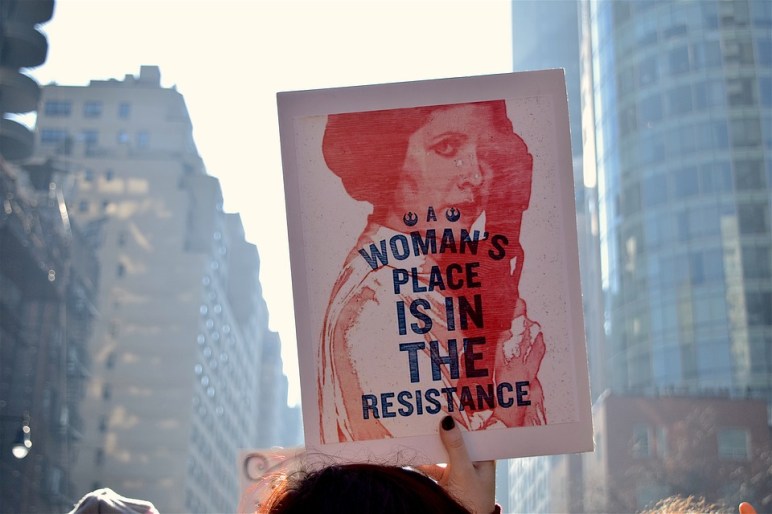
Gender equality is more than a goal in itself. It is a precondition for meeting the challenge of reducing poverty, promoting sustainable development and building good governance.—Kofi Annan

When I started working as a proofreader/copy editor in the social/market research industry, I had to learn the correct way to phrase data findings. Basically, I had to learn how to write up the data in order to edit reports on the data.
Having proofread and edited hundreds of reports, proposals and articles over the past 19 years, I’ve seen the same errors popping up over and over again. Here are the top three mistakes when it comes to writing up data findings:
Data comparison as a percentage. When you’re comparing data, always refer to differences as percentage points or points—not percent. If your data show that last year 25 percent strongly agreed that taxes are too high and this year 35 percent strongly agree, that’s a difference of 10 points. But if strong agreement increased by 10 percent from last year, that would make it only 27.5 percent strongly agreeing (10% of 25 = 2.5 points).
Same goes for citing margin of error (MOE): The findings of the survey are accurate to +/- 1.2 percentage points, 19 times out of 20.
Data difference that’s not statistically significant. Speaking of margin of error (MOE), when citing differences in data, the MOE will dictate whether those differences are statistically significant. If your margin of error is +/- 2.0 points, a data difference of one or two points either way isn’t statistically significant. If you want to write it up as a directional change, that’s fine—but, otherwise, you must characterize it as statistically unchanged.
It’s also important to keep in mind that the margin of error for subgroups (like region, gender and age, etc.) will be larger than that for your total sample—in some cases, considerably so. This means those differences need to be especially marked to be worth mentioning. Remember: The smaller the sample, the larger the MOE.
Incomplete demographic groups. When reporting on demographic variations, make sure you’re not leaving anyone out. If your age breakdown has seniors (age 65 plus) combined into one age cohort, writing this group up as “over 65” would be incomplete. What happened to the 65-year-olds? In this case, “65 and older” encompasses your entire age demographic.
Same goes for other demographics like household income. If the top income group in your statistical tables is $100,000 plus, reporting it as “over $100,000” would be incorrect; “$100,000 or more” would also include those making $100,000.
Bonus error:
Data as a singular noun. Unless you’re citing a single data point, general mentions of data should be in the plural: The data are weighted to reflect the national population.
There you have it. Of course, it’s always good to have someone—preferably a professional proofreader/copy editor—check your work before you hit Send or Print on that document.
Happy writing!
With thanks to Brenda Sharpe, Senior Research Associate at Environics Research, for her assistance with framing these data issues.

We need quiet time to examine our lives openly and honestly— spending quiet time alone gives your mind an opportunity to renew itself and create order.—Susan L. Taylor

You may not control all the events that happen to you, but you can decide not to be reduced by them.—Maya Angelou

The most difficult thing is the decision to act, the rest is merely tenacity. The fears are paper tigers. You can do anything you decide to do. You can act to change and control your life; and the procedure, the process is its own reward.—Amelia Earhart
 words with cowbell